The commission voted 3-1 to adopt a resolution finding the city's combined 10-year capital improvement plan for 2027–2036 complies with the Bloomington 2040 comprehensive plan, a review required by state law. Staff stressed that listing a project in the plan does not authorize or fund it; each project still needs council approval and any required zoning approvals. Commissioner Coleman voted no. The City Council will hold a public hearing and consider formal adoption at 6:30 p.m. on December 7.
Decided: The Planning Commission found that the city's 2027–2036 list of planned building and infrastructure projects fits with Bloomington's comprehensive plan; the City Council holds a public hearing and final vote on December 7.
Result: Approved, 3 to 1, by voice vote
The meeting video doesn't make clear how each member voted. The city posts official voting results once the minutes are approved.
Following this: 2027-2036 Capital Improvement Plan: Draft goes to council
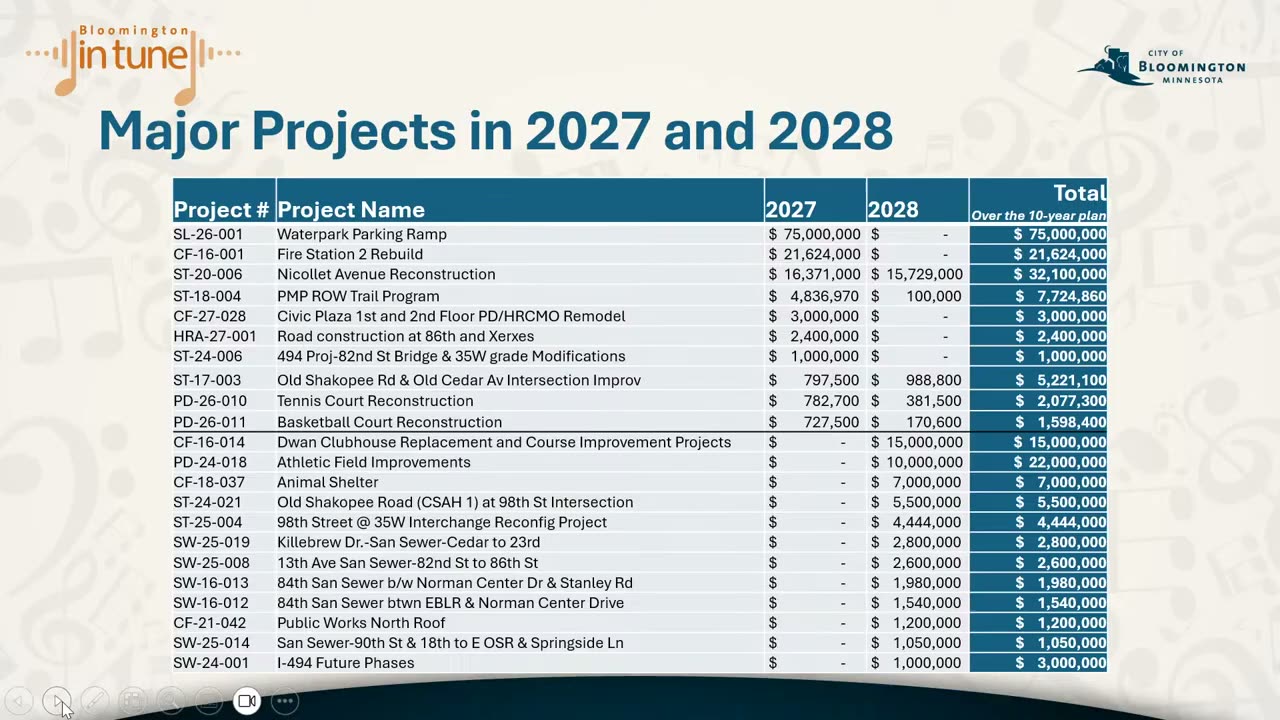
Staff highlighted major projects in the capital plan: rebuilding a fire station with construction expected in 2027, with zoning approvals possibly coming to the commission before the end of this year; replacing the Dwan golf course clubhouse and improving the course around 2028, with a Parks and Recreation community engagement process underway; and building a new animal shelter facility in 2028. New items include solar panels on the new fleet maintenance garage at the public works campus, and a new public road tied to the redevelopment of the former St. Mark's church site, which is planned for affordable single-family and possibly duplex homes.
Following this: 2027-2036 Capital Improvement Plan: Draft goes to council
Commissioner Coleman questioned the roughly $75 million water park parking ramp in the South Loop, which the draft plan funds with about $45 million in future tax increment (TIF) revenue bonds and about $30 million left over from the original Mall of America TIF districts. Coleman argued that another large ramp next to existing ramps, in one of the city's most transit-connected areas, conflicts with the comprehensive plan's goals for transit, walking and biking, and cited the mall's past argument that it had excess parking capacity when it sought remote airport parking. Staff said the TIF money is restricted to public improvements in the South Loop, the mall has a say in how it is spent, and the project includes pedestrian improvements beyond the ramp. Staff also said the water park's earlier zoning approval has expired, so it would need new approvals. Other commissioners said the funding decision belongs to the Port Authority and the project will get further review.
Following this: Port Authority Gives Mall of America Water Park Project Two More Years
Staff reported that the first phase of public engagement on the Bloomington 2050 comprehensive plan recorded about 646 interactions across 15 events, plus several hundred postcard responses and 172 online survey responses. Common themes included walkable and connected neighborhoods, more housing options and affordability, transit, walking and biking, trees and green space, and more community gathering places, or 'third spaces.' Staff said the launch event was pushed from March to May because, given events in Minnesota at the time, people were reluctant to engage in person with government. Draft priorities will go back out for public input early next year, then to the City Council in April. The Metropolitan Council must approve the final plan by December 31, 2028.
Following this: Bloomington 2050: Where the plan stands
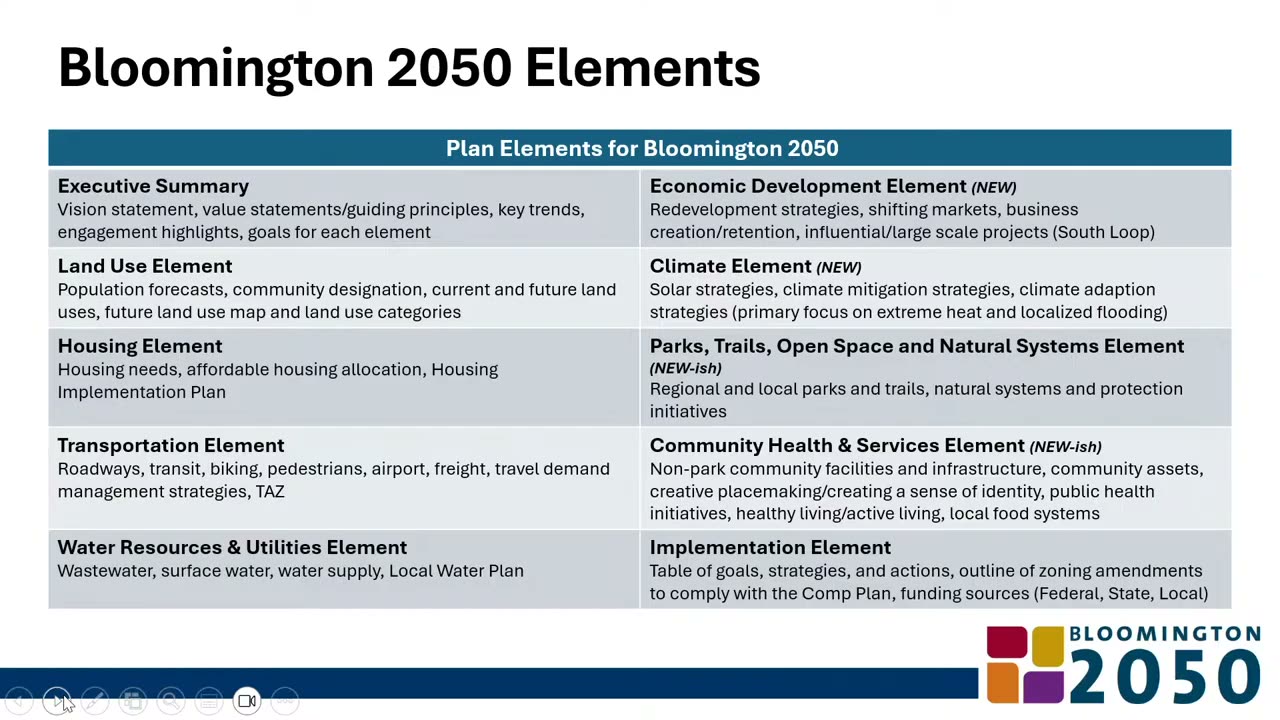
The 2050 plan will add chapters on economic development and climate, and will split the former community facilities chapter into one on parks, trails and natural systems and another on community health and services. Commissioners asked that the plan support small businesses alongside large employers, make amenities accessible to everyone, and take a more active approach to climate action. One commissioner said the city has done little since passing a resolution supporting the Paris Agreement.
Following this: Bloomington 2050: Where the plan stands